
The healthcare environment in the fast-developing UAE is changing, and architects and consultants are aware that flooring can contribute actively to the recovery process and infection control. High-performance surfacing is a strategic pillar of hospital design where 24/7 operations can be provided in accordance with strict standards of the UAE Ministry of Health and Prevention. This shift views the physical environment not as a passive backdrop, but as a vital tool for clinical efficiency.
Beyond aesthetic appeal, hospital flooring must withstand machinery loads, chemical disinfectants, and pathogens; therefore, this guide explains why vinyl is the ultimate healthcare choice while addressing procurement, zoning, and professional installation challenges to ensure successful infrastructure implementation in the region.
The Critical Role of Flooring in Clinical Outcomes
A hospital floor is one of the hardest-working elements of the building’s infrastructure. Unlike commercial or residential spaces, healthcare environments require surfaces that manage three competing priorities simultaneously: clinical sterility, physical safety, and acoustic comfort.
When we analyze the modern patient experience, the floor is the primary surface for patient ambulation and the foundation for all mobile medical equipment. Poorly specified flooring can lead to increased fall risks, noise pollution that hinders vital sleep, and “micro-gaps” where bacteria can colonize. Strategic selection ensures that the flooring system supports the hospital’s overarching mission: delivering safe, high-quality care in a controlled environment.
Infection Control through Seamless Vinyl Systems
The greatest benefit of vinyl in a medical facility is that it can be used as a non-porous monolithic surface. Every seam or joint in critical areas such as Operating Theaters, Intensive Care Units (ICUs), and Emergency Rooms will be a liability to the facility.
Heat-Welding and Integral Coving
Heat-welding is done by professional installers to join together sheets of vinyl, resulting in a continuous membrane that is waterproof and blocks bio-hazards. Also, there is flash coving in which the vinyl is hoisted up the wall to remove the sharp corners that are 90 degrees. This flow in between alleviates the accumulation of microbes and quickens the clinical cleaning process, which is more efficient to ensure high standards of hospital hygiene.
Antimicrobial Surface Treatments
Modern vinyl products are often treated with high-density polyurethane (PUR) reinforcements. These treatments are not just for shine; they close the microscopic pores of the material, making it difficult for bacteria to find a foothold. In the context of Hospital Vinyl Flooring Dubai projects, these advanced surfaces are essential for maintaining the high hygiene standards expected in the city’s world-class medical districts.
Comparing Sheet Vinyl and Luxury Vinyl Tile (LVT)
Not every area of a hospital requires the same level of sterility. Strategic healthcare design involves “zoning” the facility to balance cost with performance.
Homogeneous and Heterogeneous Sheet Vinyl
Sheet vinyl is the standard for high-risk areas. Homogeneous vinyl features a single durable layer, allowing for refinishing without color loss. Heterogeneous vinyl uses multiple layers, including a decorative print and a high-performance wear layer, balancing creative design with clinical integrity. Both ensure long-term resilience in demanding medical environments.
Luxury Vinyl Tile (LVT) in Non-Clinical Zones
LVT is popular in waiting areas and offices, offering a “hospitality” feel that lowers patient anxiety. While durable and easy to replace, its numerous seams pose moisture risks, making it unsuitable for sterile zones. Choosing between LVT and welded sheets requires understanding the specific clinical demands of each room.
Durability, Wear Layers, and Chemical Resistance
The “wear layer” is the most important technical specification when reviewing flooring samples for a medical project. In a hospital, the floor is subjected to “point loading” from heavy imaging equipment and the constant friction of high-frequency foot traffic.
- Standard Requirements: For healthcare, a wear layer of at least 0.7mm is typically recommended to ensure the floor doesn’t thin out over the years of heavy use.
- Chemical Inertness: Hospital floors are cleaned with potent disinfectants, including bleach and hydrogen peroxide. The vinyl must be chemically inert to prevent discoloration or softening of the material over time.
- Stain Resistance: From iodine spills to blood and various medical reagents, the surface must be able to resist permanent staining to maintain a professional, clean appearance for the duration of its life.
Patient Safety: Slip Resistance and Ergonomics
Patient safety is a multi-dimensional challenge. In many UAE hospitals, the patient demographic includes elderly individuals and those with mobility issues. Slip resistance is verified using the “R” scale or the Pendulum Test Value (PTV). Beyond slip-resistance, safety vinyl’s cushioning reduces staff fatigue and injuries, indirectly improving performance during long shifts in high-pressure healthcare settings.
Acoustic Comfort and Healing Environments
Because high hospital noise levels increase patient blood pressure and hinder healing, acoustic vinyl reducing sound by 19dB is superior to echo-prone hard surfaces, utilizing “Evidence-Based Design” to absorb footsteps and cart clatter, effectively transforming the floor into a vital therapeutic tool for maintaining a tranquil, quiet, and restorative atmosphere.
Sustainability and Indoor Air Quality (IAQ)
Sustainability in the UAE is a requirement under various “Green Building” regulations. Vinyl flooring has evolved significantly to meet these needs.
- Low-VOC Emissions: High-quality vinyl is certified to have low Volatile Organic Compound emissions, ensuring that the indoor air remains free of harmful off-gassing. This is critical for respiratory patients and neonatal units.
- Phthalate-Free Manufacturing: Leading manufacturers have moved away from ortho-phthalate plasticizers, opting for safer alternatives that are better for both human health and the environment.
- Lifecycle Costs: When calculating ROI, facility managers must look beyond the initial purchase price. Vinyl’s long lifespan (often 20+ years) and low maintenance requirements make it one of the most cost-effective materials over the building’s lifecycle.
Zone-Wise Flooring Recommendations
Choosing the right material for each zone ensures longevity and compliance.
- Operating Rooms / ICU: Requires homogeneous sheet vinyl with heat-welded seams for absolute sterility and static control.
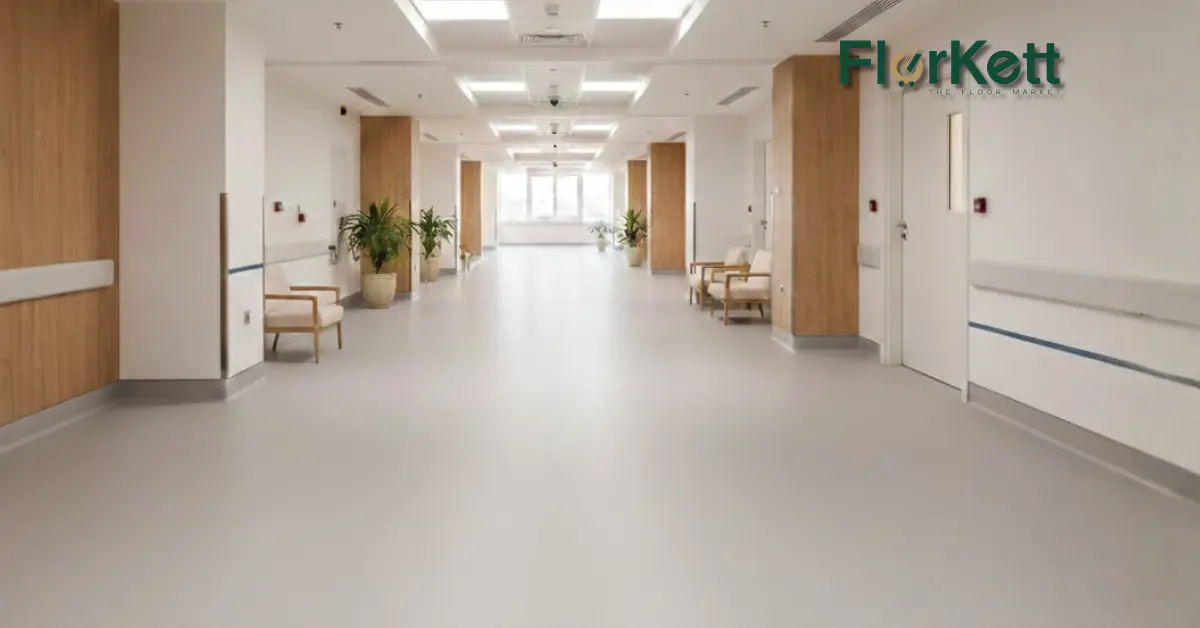
- Corridors: Requires heavy-duty heterogeneous sheet vinyl with acoustic backing to handle extreme traffic and noise.
- Patient Rooms: LVT or decorative sheet vinyl is preferred for its aesthetic appeal and underfoot comfort.
- Laboratories: Requires chemical-resistant sheet vinyl to handle spills and aggressive cleaning reagents.
Installation Excellence and Subfloor Preparation
Even the most expensive material will fail if the foundation is poor. In the UAE, the primary challenge is often the moisture content in the concrete slab due to local climate conditions. Before any installation begins, Flooring Companies in Dubai must conduct Strict moisture tests using hygrometers.
To prevent Glue failure, experts apply moisture membranes and self-leveling compounds. This ensures a smooth subfloor, stopping imperfections from damaging the vinyl. Partnering with top Flooring Companies in Dubai guarantees clinical-grade results and long-term durability.
Conclusion: A Strategic Decision for Long-Term Success
Choosing the right flooring for a healthcare project in the UAE is a balancing act between medical necessity and architectural vision. By prioritizing high-performance Hospital Vinyl Flooring Dubai options, facility managers can secure a foundation that is safe, hygienic, and resilient enough to face the future of medicine. Incorporating the principles of durability, acoustics, and infection control into the flooring system is not only a construction detail but a promise to the health of all patients and members of the staff entering the building.