
Buying flooring for a gym or fitness studio looks straightforward until you are six months in, dealing with peeling edges, trapped moisture, or a supplier who has gone quiet on warranty claims. Having worked closely with facility owners across the UAE, I know that the questions you ask before signing a purchase order matter far more than the price per square meter. That is why this comprehensive Gym Flooring Dubai Checklist focuses on the technical realities of the local market, ensuring your investment survives both heavy drops and the Gulf climate.
Here are the ten questions every buyer should have answered before committing.
Why Does Material Choice Matter More Than Price?
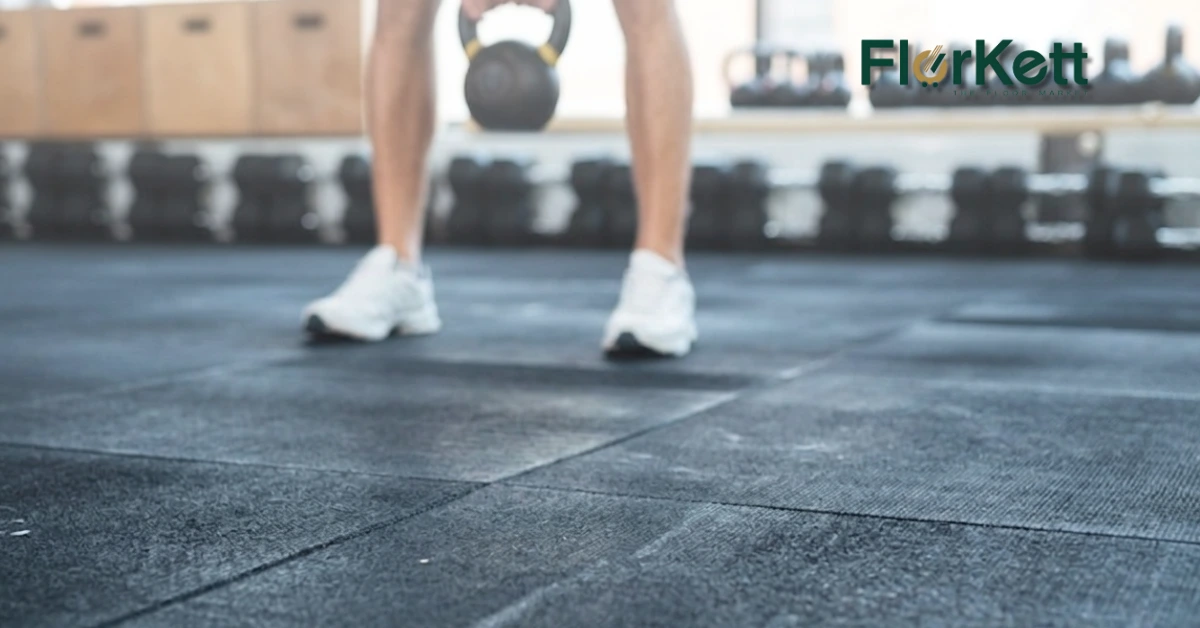
The material your flooring is made of determines how it performs under Dubai’s specific conditions, including high ambient temperatures, air-conditioned interiors with a risk of condensation, and heavy daily traffic. Rubber is the industry benchmark for commercial gyms, EPDM-blended rubber in particular, for its resistance to compression set and UV degradation. Foam tiles cost less upfront but compress permanently under heavy racks within 12–18 months. Vinyl sports flooring sits in the middle, durable, hygienic, but less forgiving under dropped weights.
Price is a consequence of material quality, not a substitute for it. A rubber tile at AED 85/m² that lasts a decade outperforms a foam tile at AED 30/m² that needs replacing in two years. Run the numbers before you compare quotes.
Question 1: What’s the material composition, and do you have a technical datasheet?
Any reputable supplier of Gym Flooring Dubai should hand you a datasheet without hesitation. Look for:
- Shore A hardness rating: (60–80 is ideal for functional training zones)
- Density (kg/m³): commercial rubber should exceed 1,000 kg/m³
- Thickness tolerance: a 10mm tile should be 10mm ± 0.5mm, not ± 2mm
If a supplier can’t produce this document, that tells you everything.
Question 2: How does this material perform at 40°C+ ambient temperature?
This one gets skipped constantly. Outdoor terraces, rooftop gyms, and warehouse-style studios in Dubai regularly hit 38–45°C. Low-grade rubber compounds soften, off-gas, and develop surface tackiness at sustained high temperatures. Ask specifically whether the product has been tested to ISO 10581 or equivalent for thermal dimensional stability. If the answer is vague, move on.
What Installation Questions Should You Be Asking?
Installation quality is where most gym flooring projects either succeed or quietly fail. A premium rubber tile installed incorrectly with the glue, on a damp substrate, or without proper edge finishing will lift, buckle, or crack within a year. The product rarely gets the blame. The installation does.
Question 3: Is the installation quoted inclusive of substrate preparation?
Concrete slabs in Dubai buildings are often finished with a curing compound that actively prevents glue bonding. Proper prep means grinding or shot-blasting the surface, applying a moisture barrier if RH exceeds 75%, and priming before any tile is laid. If your quote doesn’t mention substrate work, ask why and get the answer in writing.
Question 4: What adhesive system are you using, and is it solvent-free?
This matters for two reasons: VOC emissions in an enclosed gym environment, and bond integrity over time. A polyurethane-based, solvent-free adhesive (such as those meeting EN 1372 standards) provides a permanent bond that doesn’t soften in heat. Some contractors default to pressure-sensitive adhesives to speed up the job. That’s fine for loose-lay applications, but not for a permanently bonded installation under heavy equipment.
Question 5: How long is the curing and acclimatisation period before the space can be used?
Rubber flooring needs 24–48 hours to acclimate to the room’s temperature before installation. Post-installation, adhesive systems need 72 hours minimum before equipment is moved in. Any contractor promising same-day installation and next-day use should be questioned.
Here’s What Most Buyers Miss About Thickness
The most common misconception I encounter is that thicker flooring is always better. It isn’t. Thickness should match the use case, full stop.
Evaluating the exact thickness you need for each zone rather than just buying the thickest option available is a critical step that belongs on every owner’s Gym Flooring Dubai Checklist. Over-specifying thickness creates its own problems. A 20mm rubber floor in a cardio zone is unnecessary, raises floor-to-door clearances, creates trip hazards at transitions, and adds significant structural load. In older Dubai buildings, this can be a genuine issue. I’ve seen fit-outs require remedial carpentry on every door in a studio because the floor was 8mm thicker than the space was designed for.
Match thickness to function:
- Free weights and deadlift platforms: 15–20mm vulcanised rubber, or a dual-layer system
- Functional training and HIIT zones: 10–12mm
- Cardio and stretching areas: 6–8mm
- Spin and cycling studios: 8mm, shock-absorbent vinyl or rubber
Question 6: Have you assessed the transition heights between zones?
A well-designed gym floor plan accounts for transitions between zones of different thickness. Bevelled edge strips, ramped transitions, and consistent height across high-traffic corridors aren’t cosmetic details; they’re a liability concern.
How Do You Evaluate a Supplier Before Signing?
A product is only as reliable as the company standing behind it. Dubai’s commercial flooring market includes serious, experienced operators and resellers moving container loads of unverified product with no local support infrastructure.
Question 7: Do you have completed commercial installations I can visit in Dubai?
This is non-negotiable for projects over AED 50,000. Any established supplier among the reputable flooring companies in Dubai should be able to provide two or three reference sites within a 20-minute drive. If they can only show you photos, treat that with doubt. Walk the actual floor, check the edges, and look at high-wear areas near entrance points and equipment zones.
Question 8: What does the warranty cover, and who administers it?
A five-year warranty administered by a European manufacturer with no UAE agent is essentially unenforceable. Get clarity on:
- Who is the warranty obligor: manufacturer, importer, or installer?
- What voids the warranty: cleaning chemicals, UV exposure, specific adhesives?
- What is the claims process, and what’s the average resolution time?
Warranties with local administrative responsibility are meaningfully different from those that require shipping samples to a factory in Germany for assessment.
Question 9: Are your products compliant with UAE fire safety standards?
ASTM E648 (critical radiant flux) and ASTM E662 (smoke density) are the standards most commonly referenced in UAE building regulations and Dubai Civil Defence requirements for commercial occupancies. For gym studios in mixed-use towers or mall-adjacent properties, non-compliance can result in fitout rejection or delayed occupancy permits. Ask for the test certificate, not just a verbal assurance.
What Should the Post-Installation Plan Include?
A floor is an asset. Treating it like one means planning for maintenance from day one.
Question 10: What is the recommended cleaning protocol, and which products are safe to use?
This sounds mundane. It isn’t. Rubber flooring is sensitive to petroleum-based cleaners, which degrade the binder over time, and to bleach concentrations above 1%, which causes surface oxidation and brittleness. Ask for a written care guide and cross-check that your cleaning contractor is using compatible products. Most commercial gym floors that fail early have been cleaned with the wrong chemicals, not worn out through use.
Beyond cleaning, establish a quarterly inspection routine: check adhesive bond integrity at high-traffic entry points, inspect edge trim for lifting, and reseal any cut edges that weren’t finished during installation. These are 15-minute checks that prevent four-figure repair bills.
Make the Decision with Confidence
The Dubai gym and fitness market is growing, and so is the range of flooring products competing for your budget. The difference between a floor that performs for a decade and one that creates problems inside 18 months usually comes down to the quality of the questions asked before the first tile is laid.
Before you request a quote, keep this complete Gym Flooring Dubai Checklist handy to evaluate every specification. A supplier who can answer all of these questions clearly, with documentation, is worth paying a premium for. One who deflects, generalises, or makes verbal commitments without paper backing is showing you exactly how they will handle a warranty claim two years from now.
If you are currently evaluating suppliers or comparing specifications, request a site visit and a full technical submission, not just a price list. That single step separates professional procurement from an expensive guess.