
Investing in specialized athletic surfacing is not merely an aesthetic choice; it represents a fundamental safeguard for athlete safety, long-term operational costs, and overall facility performance across the Gulf region. These high-performance, engineered surfaces effectively absorb heavy kinetic impact, stabilize delicate indoor microclimates against rapid thermal changes, and reliably withstand the hyper-abrasive environmental conditions unique to the United Arab Emirates. Choosing superior materials ensures long-term durability, reduced maintenance demands, and optimal performance for every athlete using your facility.
Why Is High-Performance Sports Flooring Essential for Dubai Facilities?
High-performance athletic surfacing is critical in Dubai to mitigate heat-induced material expansion, manage indoor humidity fluctuations, and protect athletes from severe joint trauma. Quality installations engineered for local climate demands prevent costly structural warping, reduce liability risks, and ensure consistent shock absorption during intense physical activity.
Mitigating Climate Stress and Material Fatigue
Dubai’s extreme summer ambient temperatures and high coastal humidity create a punishing environment for indoor and outdoor athletic spaces. Standard flooring materials expand, buckle, or lose structural cohesion when exposed to HVAC cycling and thermal shifts. High-grade surfaces utilize specialized cross-linked polymers, moisture-tolerant adhesives, and stabilized sub-bases designed specifically to maintain structural integrity despite intense environmental friction.
When managing high-traffic commercial gyms, school halls, or professional arenas, selecting climate-resilient Sports Flooring Dubai solutions ensures your investment does not degrade within a few seasons.
Impact Absorption and Biomechanical Protection
Athletes subject their ankles, knees, and lower back to forces exceeding three to four times their body weight during lateral pivots and high-impact landings. Standard commercial or decorative floors offer zero vertical deformation, transmitting force directly into the musculoskeletal system. Engineered sports floors feature calculated force-reduction layers that distribute impact energy, preventing acute ligament tears and chronic overuse injuries.
- Force Reduction: High-tier systems absorb between 35% and 55% of kinetic energy.
- Vertical Deformation: Controlled surface yield provides stability without feeling soft or sluggish.
- Friction Coefficients: Balanced grip prevents sudden torque on knee joints during quick turns.
How Does Subfloor Engineering Impact Athletic Performance?
Subfloor engineering dictates the uniformity, energy return, and lifespan of any athletic surface. Proper subfloor preparation involves installing vapor barriers, elastic underlayments, and self-leveling compounds to eliminate structural dead spots, guarantee consistent ball rebound, and prevent sub-surface moisture accumulation in desert soil conditions.
Vapor Barriers and Sub-Base Preparation
Underneath every successful athletic surface lies a rigorously engineered sub-base. Dubai’s coastal geology means sub-grade moisture can migrate upward through concrete slabs, causing top-layer delamination or mold colonization. We install multi-layer damp-proof membranes (DPM) combined with polymer-modified self-leveling screeds to build a level, impermeable foundation.
Acoustic Dampening and Shock Distribution
Multi-story fitness centers, commercial towers, and mixed-use complexes require advanced sound and vibration isolation. Dropped dumbbells, plyometric drills, and group exercise classes create low-frequency structural noise that penetrates concrete slabs.
Integrating point-elastic pad systems or area-elastic timber subframes dampens low-frequency impact noise, protecting neighboring businesses while optimizing energy return for athletes on the surface.
What Are the Key Types of Sports Flooring for Dubai Venues?
The primary sports flooring categories include solid hardwood systems, polyurethane (PU) point-elastic surfaces, vulcanized rubber, and modular polypropylene tiles. Each material caters to specific demands, ranging from FIBA-level basketball courts to heavy weightlifting zones, extreme outdoor sun exposure, and multi-purpose school auditoriums.
Hardwood Systems vs. Synthetic Polyurethane
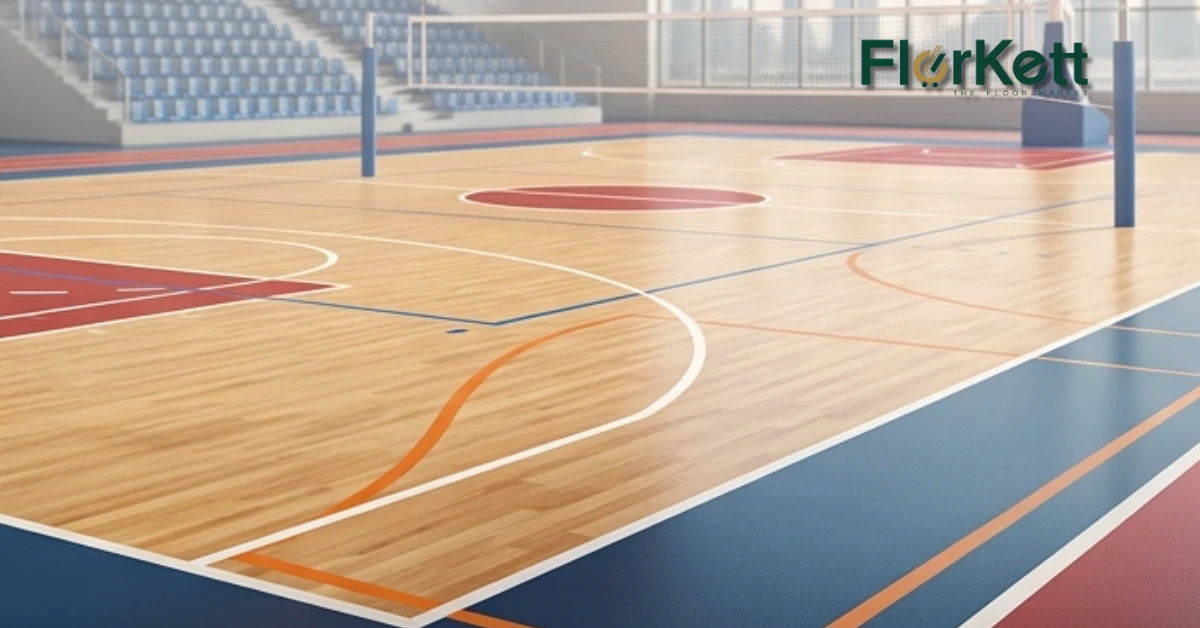
Choosing between traditional sprung hardwood and seamless polyurethane depends on facility usage, maintenance capacity, and budget parameters.
| Feature / Metric | Sprung Hardwood Systems | Seamless Polyurethane (PU) | Heavy-Duty Vulcanized Rubber |
| Primary Use | Basketball, Volleyball, Squash | Multi-purpose, Handball, Badminton | Weightlifting, Cross-training, Fitness |
| Moisture Resistance | Moderate (Requires strict climate control) | Exceptional (Seamless, non-porous) | High (Non-absorbent, resilient) |
| Impact Absorption | Area-Elastic (Spreads impact) | Point-Elastic (Local shock absorption) | High point-load shock mitigation |
| Lifespan | 20–30+ years (with sanding) | 10–15 years (Resealable) | 15+ years (Extremely durable) |
For versatile commercial projects across the UAE, selecting high-spec Flooring Dubai materials engineered for multi-sport venues ensures long-term operational flexibility without sacrificing shock absorption or playability.
Specialized Rubber for Free Weight and Heavy Strength Zones
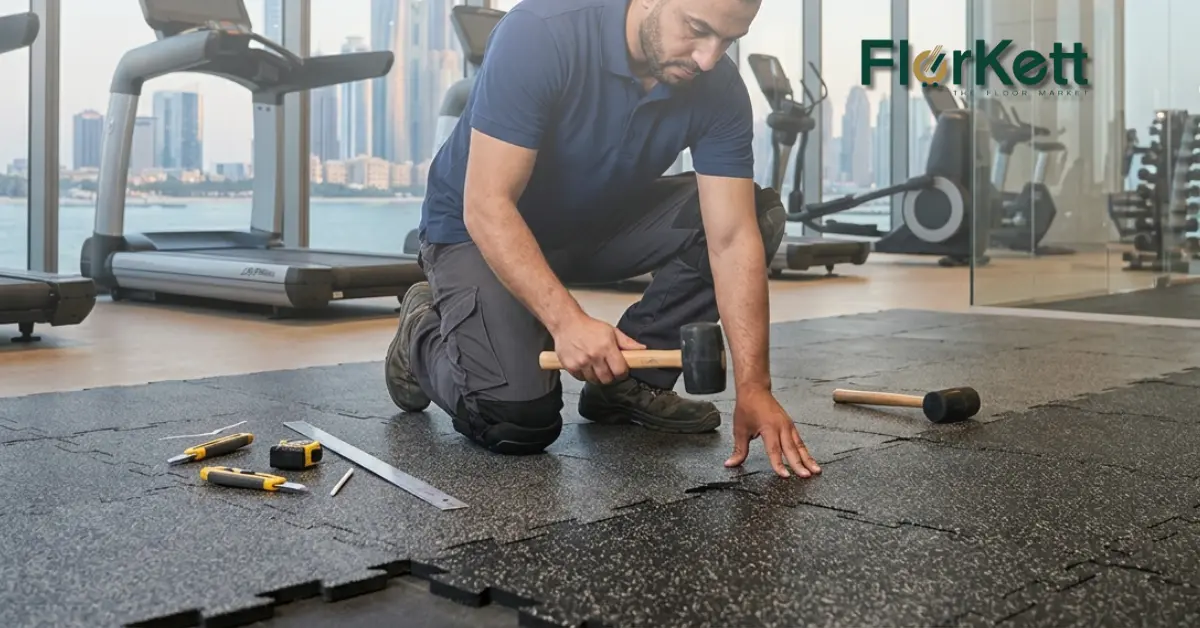
Standard rubber rolls crumble under concentrated impact from heavy kettlebells and barbells. Elite strength zones require high-density, vulcanized rubber tiles with engineered dual-layer construction: a dense top wear layer for abrasion resistance supported by a baffled bottom layer to dissipate massive point loads.
How Does Quality Flooring Prevent Athlete Injuries and Liability?
Premium sports flooring prevents injuries by delivering consistent friction parameters, certified shock absorption, and uniform energy rebound across the entire surface. By eliminating unpredictable slippery spots, excessive surface drag, and hard concrete dead zones, facility operators drastically reduce acute traumatic injuries and legal liability exposure.
Eliminating Rotational Friction and Slippage Hazards
Surface friction must fall within strict internationally recognized limits (EN 14904). If a surface has too much grip, an athlete’s shoe locks during a rapid pivot, transferring rotational torque directly into the anterior cruciate ligament (ACL) and meniscus. If the floor lacks sufficient friction, slipping injuries occur.
- Consistent Surface Coating: Professional topcoats maintain ideal friction coefficients (80–110 sliding value).
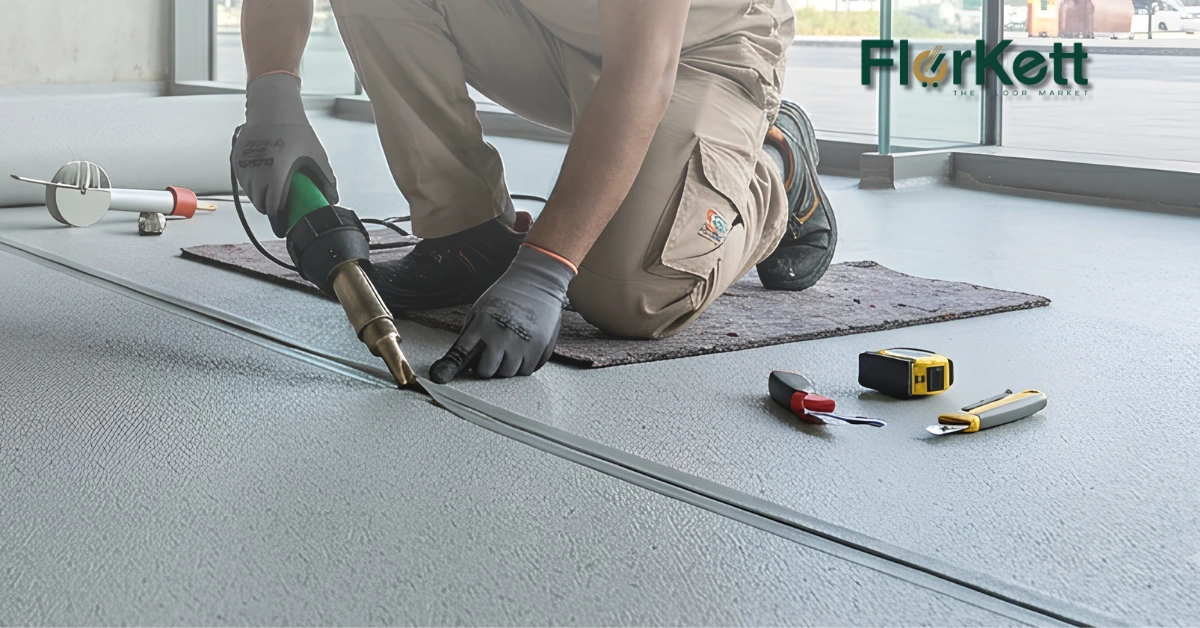
- Seamless Laying Techniques: Eliminates tripping hazards caused by unraveled seams or lifted edges.
- Non-Glare Finishes: Prevents visual distortion caused by bright overhead arena lighting.
Protecting Long-Term Joint Health in Youth Sports
Young athletes whose joints are still developing are particularly vulnerable to sub-standard flooring. Hard, non-resilient surfaces accelerate lower-limb fatigue and cause overuse conditions such as shin splints, stress fractures, and Osgood-Schlatter disease. Installing certified area-elastic or point-elastic systems protects young athletes, establishing your venue as a trusted tier-one training ground.
What Is the Real Cost of Choosing Substandard Sports Flooring?
Choosing cheap, non-certified sports flooring leads to premature surface cracking, subfloor rot, frequent operational shutdowns, and costly full-scale replacements within two to three years. Beyond direct material failures, substandard floors expose facility owners to injury claims, degraded reputation, and higher long-term maintenance costs.
Hidden Operational and Maintenance Expenses
Inexpensive commercial vinyl or uncertified rubber might lower initial capital expenditure, but they lack UV stabilizers, anti-bacterial treatments, and wear-layer protection.
- Frequent Resurfacing Needs: Lower-grade surfaces lose structural elasticity rapidly, requiring complete tear-outs.
- Hygienic Degradation: Poorly sealed seams trap sweat, bacteria, and moisture, leading to persistent foul odors and fungal growth.
- HVAC Energy Strain: Non-insulated subfloors force air-conditioning units to work harder to combat ground thermal transfer.
Investing in top-tier materials from day one delivers a far lower total cost of ownership over a ten-year operational cycle.
Key Technical Certifications to Look For
To ensure your facility meets international safety and performance standards, demand compliance with key regulatory frameworks:
- EN 14904: The European benchmark for indoor sports surfaces, covering shock absorption, vertical deformation, and friction.
- FIBA Approval: Essential for competitive basketball venues requiring specific ball rebound percentages (minimum 90%).
- BWF / ITF Certification: Industry-specific standards for badminton and tennis surface speed, bounce stability, and traction.
- VOC Emission Standards (LEED Compliance): Guarantees zero harmful chemical off-gassing, keeping indoor air clean within enclosed spaces.
Choosing the Right Installation Partner
Executing a world-class athletic surface requires deep technical expertise, thorough site-specific moisture testing, and precision subfloor leveling. From selecting appropriate shock pads to applying exact game-line markings, working with proven installation specialists ensures your athletic facility performs reliably, maintains structural integrity, and protects athlete safety for many years to come. Investing in experienced professionals ultimately guarantees that your surface retains its high-performance characteristics, safety ratings, and aesthetic appeal despite intense daily usage in the challenging Gulf climate.