
Solid wood flooring is one of the most transformative architectural elements you can introduce to a high-end property. Across luxury villas in Emirates Hills, contemporary residences in Downtown Dubai, and refined beachfront estates on Palm Jumeirah, natural timber adds organic warmth, rich texture, and an understated elegance that synthetic alternatives simply cannot replicate.
Designing with solid wood in the United Arab Emirates requires balancing high-end aesthetic vision with practical technical choices tailored to the local environment. Below are practical design ideas, expert species recommendations, and proven installation strategies for integrating solid wood flooring into your luxury Dubai interior.
1. Elevate Living Spaces with Classic Parquet Patterns
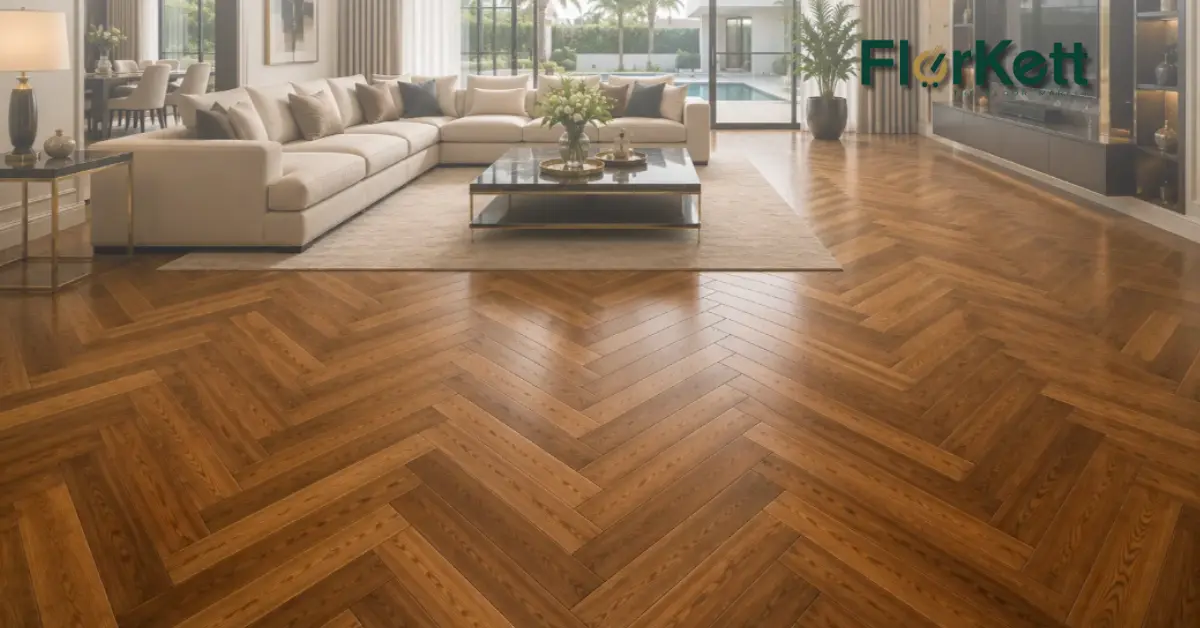
How do parquet patterns like Herringbone and Chevron enhance Dubai interiors? Parquet patterns add architectural interest, dynamic movement, and visual structure to open-plan living areas. Chevron and Herringbone arrangements draw the eye across large rooms, creating a sophisticated design anchor that elevates both contemporary minimalist and traditional architectural styles.
Pattern Profiles at a Glance
- Herringbone Pattern: Rectangular blocks set at precise 90-degree angles. Creates a broken zig-zag effect with classic weight. Best suited for grand foyers and formal dining rooms.
- Chevron Pattern: Angle-cut blocks (typically 45 or 60 degrees) meeting at a continuous central point. Creates sharp V-shaped lines with crisp directional flow. Best suited for modern minimalist villas and open lounges.
Installing Parquet Flooring brings structural geometry into expansive residential spaces. In large open-plan Dubai villas, wide expanses of single-plank flooring can sometimes feel visually monotonous. Introducing a geometric layout adds depth without cluttering the floor plan.
Herringbone Precision: Rectangular timber blocks are laid at 90-degree angles to produce a traditional zig-zag pattern. This arrangement creates subtle directional movement, guiding the eye toward key architectural features like floor-to-ceiling windows or custom feature walls.
Chevron Clean Lines: Cut at a precise 45-degree or 60-degree angle, Chevron blocks meet at a clean central point to form continuous “V” shapes. This produces a sleeker, more modern aesthetic that complements minimalist Scandinavian or urban luxury design schemes.
For high-traffic living areas, specify dense European White Oak or Teak parquet with a durable hardwax oil finish. This combination retains the timber’s natural tactile feel while providing resilient protection against daily wear.
2. Introduce Wide-Plank European Oak for Modern Luxury
Why are wide-plank wood floors popular in high-end Dubai homes?
Wide-plank wood flooring minimizes seam lines across expansive floor areas, creating a seamless, uninterrupted visual flow. This generous proportion emphasizes room dimensions, enhances natural light reflections, and delivers an elegant, minimalist backdrop for upscale interiors.
Dimensional Impact on Interior Design
- Standard Planks (90mm – 120mm): Traditional aesthetic, higher line density, ideal for compact suites and cozy bedrooms.
- Medium Planks (120mm – 180mm): Balanced proportions, highly versatile for standard open-plan residential layouts.
- Wide Planks (180mm – 260mm+): Luxurious, expansive feel, dramatically reduced visual seams, maximizes scale in grand spaces.
Plank width dramatically alters how a space is perceived. Standard narrow boards add more horizontal seam lines, creating a busier visual field. Planks measuring 180mm to 260mm+ in width simplify the visual field, allowing the natural grain structure of the wood to take center stage.
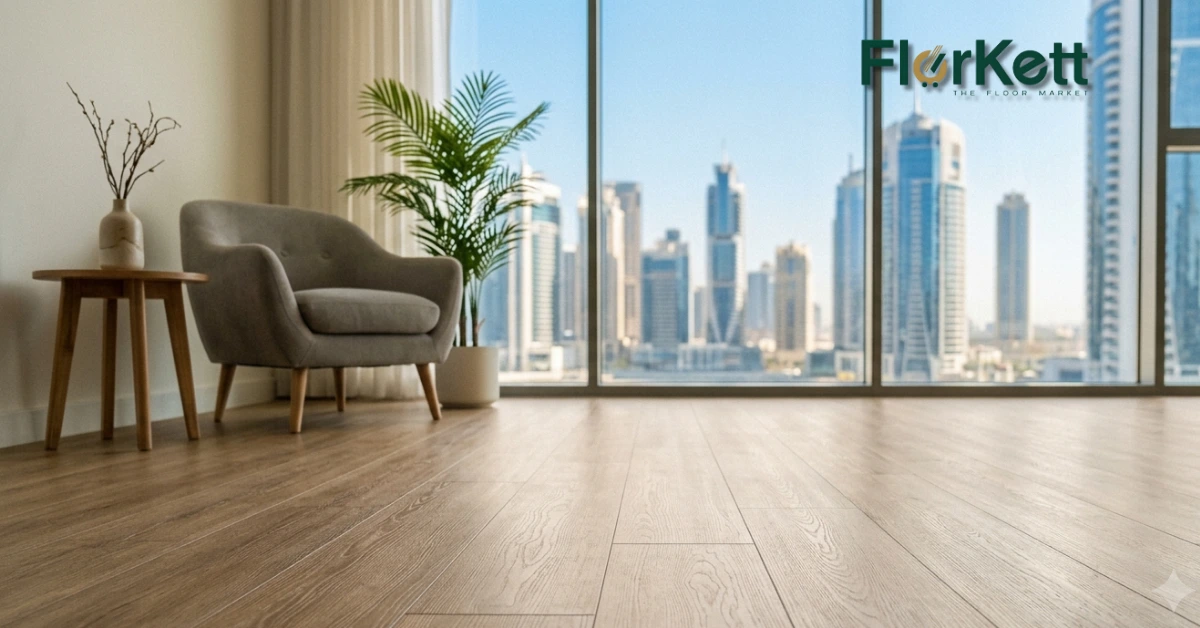
Wide-plank European Oak pairs exceptionally well with Dubai’s modern architectural aesthetics, such as double-height ceilings, glass curtain walls, and neutral color palettes. The broader surface area highlights natural character marks, including subtle color variations and delicate grain rays, grounding bright interiors with visual warmth.
When selecting solid wide planks, proper subfloor prep is essential. Wider solid boards naturally experience higher leverage forces during micro-climatic shifts. Ensure subfloors are perfectly leveled and bonded with high-grade flexible polyurethane adhesives to keep wider planks securely anchored.
3. Play with Rich Tones: From Smoked Oak to Deep Teak
What wood color tones best complement modern luxury interiors in Dubai?
Warm, medium-to-dark timber tones such as smoked oak, walnut, and rich teak create sophisticated visual contrast against light-colored walls, marble counter surfaces, and modern metal accents. These tones add warmth and depth to sunlit residential interiors.
Timber Color Spectrum & Interior Pairings
- Deep Warm & Rich Tones: Species like Teak, Merbau, and American Walnut. Pairs best with travertine, brushed brass fittings, and warm white plaster walls.
- Smoked & Charcoal Shades: Fumed or Smoked European Oak. Pairs best with brushed stainless steel, architectural concrete, and bold artwork.
- Muted Natural Blondes: Natural European White Oak and Ash. Pairs best with raw linen textures, matte black architectural hardware, and light natural stone.
Choosing the right wood tone involves balancing natural daylight with internal color schemes. Dubai homes feature generous floor-to-ceiling windows that flood rooms with intense light. Light-toned floors can sometimes feel washed out under harsh sunlight, whereas rich, warm timber shades absorb glare and ground the interior space.
Smoked & Fumed Oak: Ammonia-fuming processes react with the natural tannins in oak, darkening the wood deep into its core rather than just tinting the surface. This produces sophisticated, smoky gray-brown tones that do not fade or wear off over time.
Warm Natural Teak & Walnut: Teak offers golden-brown hues with rich dark striping, while American Walnut delivers deep chocolate tones. Both species pair exceptionally well with soft cream plaster, brushed brass hardware, and white marble accents.
If you are exploring color variations across different timber species, browse our full selection of Wood Flooring Dubai to review natural shade ranges, surface finishes, and grain profiles.
4. Integrate Solid Wood Across Sunlit & Indoor-Outdoor Spaces
How do you successfully extend solid wood flooring toward sunlit patios and glass facades? Successfully extending solid wood toward high-sunlight areas requires UV-inhibiting protective finishes, proper perimeter expansion gaps, and consistent indoor climate control. These steps preserve color integrity and prevent board cupping near floor-to-ceiling glass doors.
Thermal & Light Mitigation Checklist
- UV Exposure Protection: Apply UV-filtering architectural window films and anti-fade topcoat finishes to shield raw wood fibers from solar bleaching.
- Thermal Radiant Control: Utilize solar shading, motorized drop-down blinds, or low-E smart glazing to reduce direct surface heat spikes.
- Board Movement Mitigation: Maintain standard 12mm to 15mm perimeter expansion gaps hidden beneath baseboards to allow natural expansion without buckling.
Dubai’s architectural designs frequently celebrate seamless indoor-outdoor living, with expansive sliding glass doors opening onto private terraces or poolside decks. Bringing solid timber right up to these sunlit thresholds creates a fluid transition between interior living areas and outdoor landscaping.
Direct sunlight passing through architectural glass generates localized radiant heat. Unchecked heat can cause localized moisture loss in wood boards, leading to surface micro-cracking or minor gapping between planks. Proper engineering near glass parameters guarantees long-term durability without sacrificing natural light.
5. Select Climate-Resilient Hardwood Species
Which solid wood species offer the best stability for UAE interior environments? Teak, Iroko, Merbau, and dense grades of European White Oak are among the most dimensionally stable wood species for Dubai interiors. Their natural oil content and tight grain structures make them highly resistant to environmental changes.
Species Stability & Hardness Profiles
- Burmese Teak: Janka Hardness ~1,000 lbf. Exceptional natural stability, high natural oil content, golden-brown hue.
- Iroko (African Teak): Janka Hardness ~1,260 lbf. High stability, dense cellular structure, rich warm brown tone.
- European White Oak: Janka Hardness ~1,360 lbf. Moderate-to-high stability, highly versatile grain, accepts custom staining beautifully.
- Merbau: Janka Hardness ~1,920 lbf. High stability, deep reddish-brown tone, extremely tough against impact.
Wood is a natural, porous material that responds to moisture levels in the air. In coastal desert environments, relative humidity fluctuates between seasons—shifting from dry, air-conditioned indoors to humid outdoor air. Selecting dense, stable hardwood species helps maintain tight joinery year-round.
Teak & Iroko: Naturally rich in protective oils and resins, these tropical hardwoods resist moisture absorption. Their low coefficient of expansion makes them remarkably stable under ambient humidity shifts.
European White Oak: Valued for its structural density, white oak accepts custom stain finishes beautifully while maintaining reliable dimensional performance when properly acclimated. Lighter, softer species with high volumetric shrinkage rates (such as untreated pine or soft beech) are generally less suitable unless air conditioning systems run non-stop year-round.
6. Combine Wood with Marble and Natural Stone for Mixed-Material Floors
How can home designers effectively blend solid wood with marble flooring? Combine wood and marble by inserting flush-mounted brass or aluminum transition strips at material borders. Matching the physical thickness of both materials and securing them to a shared, level subfloor creates a flat surface transition without awkward step-ups.
Mixed-Material Technical Strategies
- Height Differential Resolution: Recess or build up concrete subfloors prior to laydown to achieve absolute 100% flush horizontal alignment.
- Differential Movement Control: Insert flexible expansion gaskets or thin metal inlaid transition trims between borders.
- Edge Protection: Precision-bevel stone and timber edges along border seams to eliminate micro-chipping over time.
Combining contrasting materials is an effective way to define functional zones within open-plan residences. Pairing cool white Italian marble (such as Calacatta or Carrara) with rich oak or walnut introduces textural variation while maintaining an elevated interior aesthetic.
Foyer Transitions: Position solid wood planks to radiate outward from a central marble inlay in the entryway, creating a refined threshold between the entrance foyer and main living spaces.
Dining and Lounge Zoning: Frame living room seating areas with solid wood, bordering them with natural stone pathways to subtly separate lounge spaces from dining or hallway corridors.
When installing mixed-material floors, remember that wood expands and contracts while natural stone remains dimensionally rigid. Never butt solid wood flush against stone without leaving a narrow, flexible expansion seam. Utilizing micro-thin metal inlaid transition profiles (available in brushed brass, bronze, or matte black) creates a clean, protective join between materials.
To explore professional installation standards and discover complete product ranges tailored for luxury properties, review our full catalog of Flooring Dubai options.
Key Maintenance Rules for Preserving Solid Wood Floors
Maintaining solid wood flooring in air-conditioned desert climates involves building consistent care habits to preserve the timber’s appearance and structural integrity.
- Maintain Stable Ambient Indoor Humidity: Keep indoor relative humidity levels between 40% and 60%. If a property remains unoccupied during summer months, run climate control systems on an automated schedule to prevent extreme humidity spikes.
- Use Micro-Damp Cleaning Tools: Avoid wet mopping or standing water on timber surfaces. Clean floors using vacuum soft-brush attachments, followed by a micro-damp microfiber mop paired with pH-neutral timber cleaners.
- Protect Against Sand & Grit Scratching: Fine desert dust acts like sandpaper under footwear. Position high-density entrance mats at exterior doorways, and place protective felt pads under all furniture legs to prevent surface scuffing.
- Apply Periodic Protective Treatments: Reapply hardwax maintenance oils every 18 to 24 months in high-traffic residential zones to replenish timber fibers and preserve water resistance without stripping the original finish.
Solid wood flooring remains an enduring architectural feature for luxury interiors. By selecting climate-resilient timber species, specifying precise layouts like wide planks or geometric parquet, and following proper subfloor prep protocols, you can create a refined interior space that lasts for generations.