
Dubai homeowners and designers face a specific challenge: flooring that looks as refined as marble or natural wood but can survive the region’s heat, humidity swings, and sandy foot traffic. After years of specifying and installing flooring across villas, apartments, and commercial fit-outs here, we’ve watched luxury vinyl flooring move from a budget alternative to a genuine premium option. This guide covers what makes it work, where it fits, and how to choose it with confidence.
What Makes Luxury Vinyl Flooring a Premium Choice for Dubai Homes?
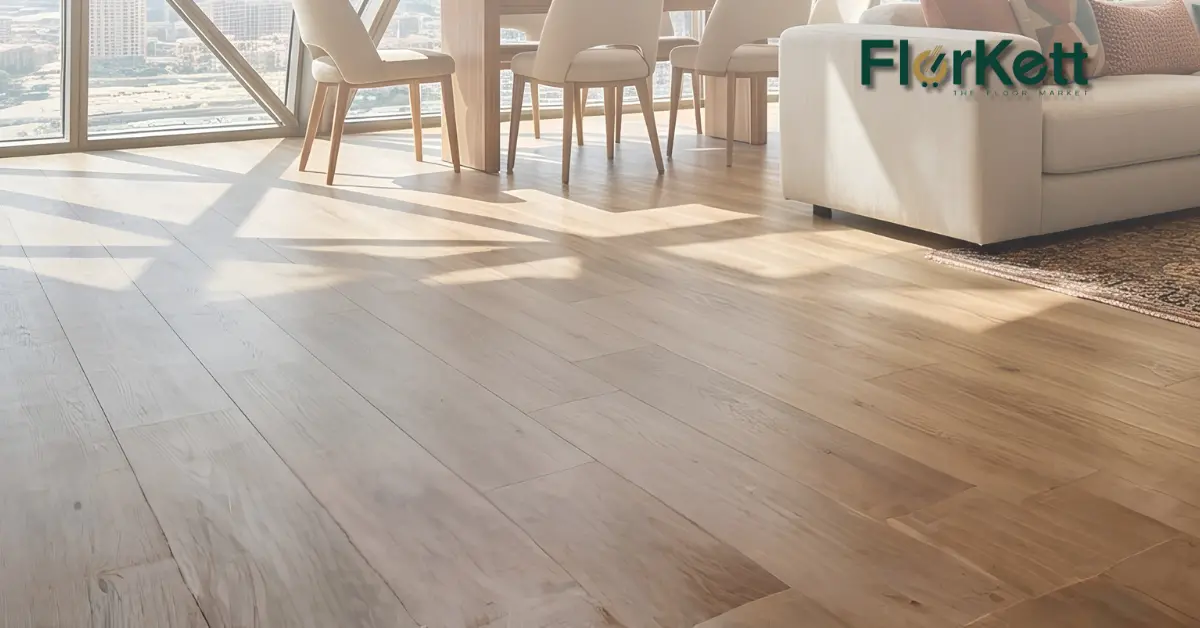
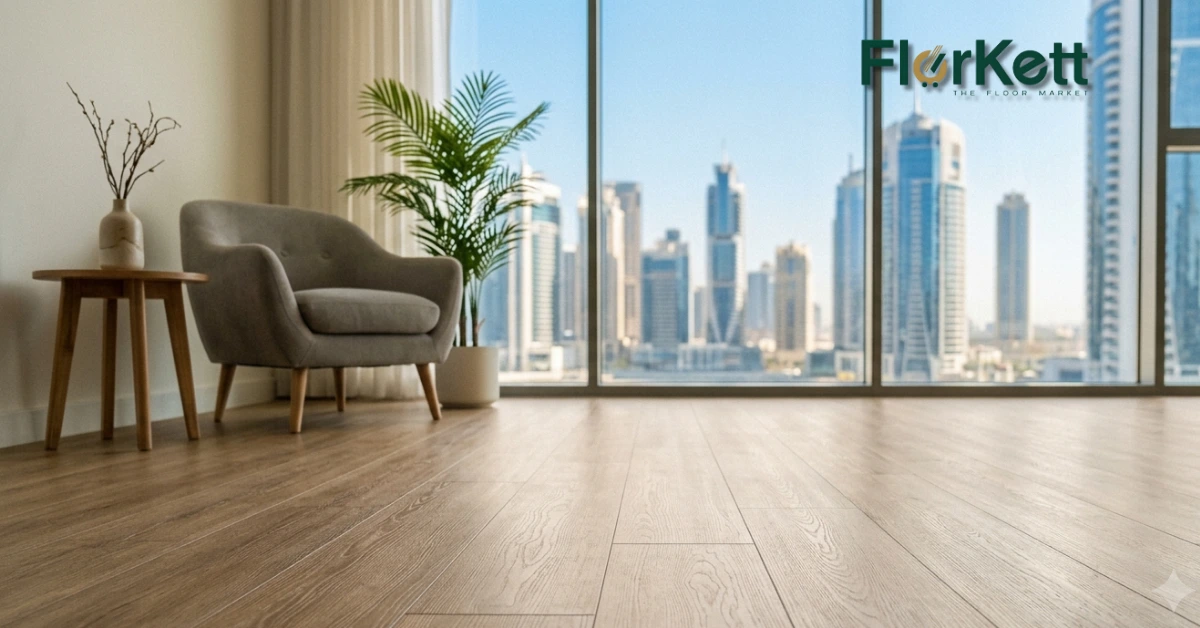
Quality LVT Flooring Dubai achieves a premium look through high-definition printing and embossed textures that replicate wood grain and stone veining with striking accuracy, combined with a protective wear layer that keeps that appearance intact under Dubai’s heavy foot traffic and constant air-conditioning cycling.
What surprises most clients on their first showroom visit is how close modern LVT (Luxury Vinyl Tile/Plank) sits to the real material, visually and underfoot. The manufacturing process layers a printed design film beneath a clear urethane-coated wear layer, so the pattern doesn’t fade or scuff the way older vinyl sheets did.
In practical terms, this means:
- Realistic wood and stone finishes: oak, walnut, travertine, and marble visuals with matching texture
- Consistent batch quality, so a large villa floor doesn’t show visible seams between planks
- A warmer, quieter underfoot feel than porcelain tile, useful in bedrooms and majlis areas
- Slim profiles that sit flush with existing thresholds during renovations
We’ve specified LVT for clients who initially wanted natural marble but backed away once they saw the maintenance demands and price per square metre. The visual gap has narrowed enough that most guests can’t tell the difference from a standing view.
How Does LVT Handle Dubai’s Heat and Humidity Better Than Other Flooring?
Quality LVT resists warping from heat and doesn’t absorb moisture the way engineered wood does, making it stable in villas with large glass facades and apartments where humidity fluctuates between air-conditioned interiors and balcony access points.
Solid and engineered timber floors are notorious for problems here. Wood is hygroscopic; it expands and contracts as moisture shifts, and Dubai’s swing between outdoor humidity and dehumidified interiors is aggressive enough to cause cupping or peaking within a year or two if acclimatisation isn’t handled correctly.
Vinyl, by contrast, is a closed, non-porous material that doesn’t take on ambient moisture the same way, which is why we recommend it for:
- Ground-floor rooms adjacent to gardens or pools
- Kitchens and utility areas exposed to occasional spills
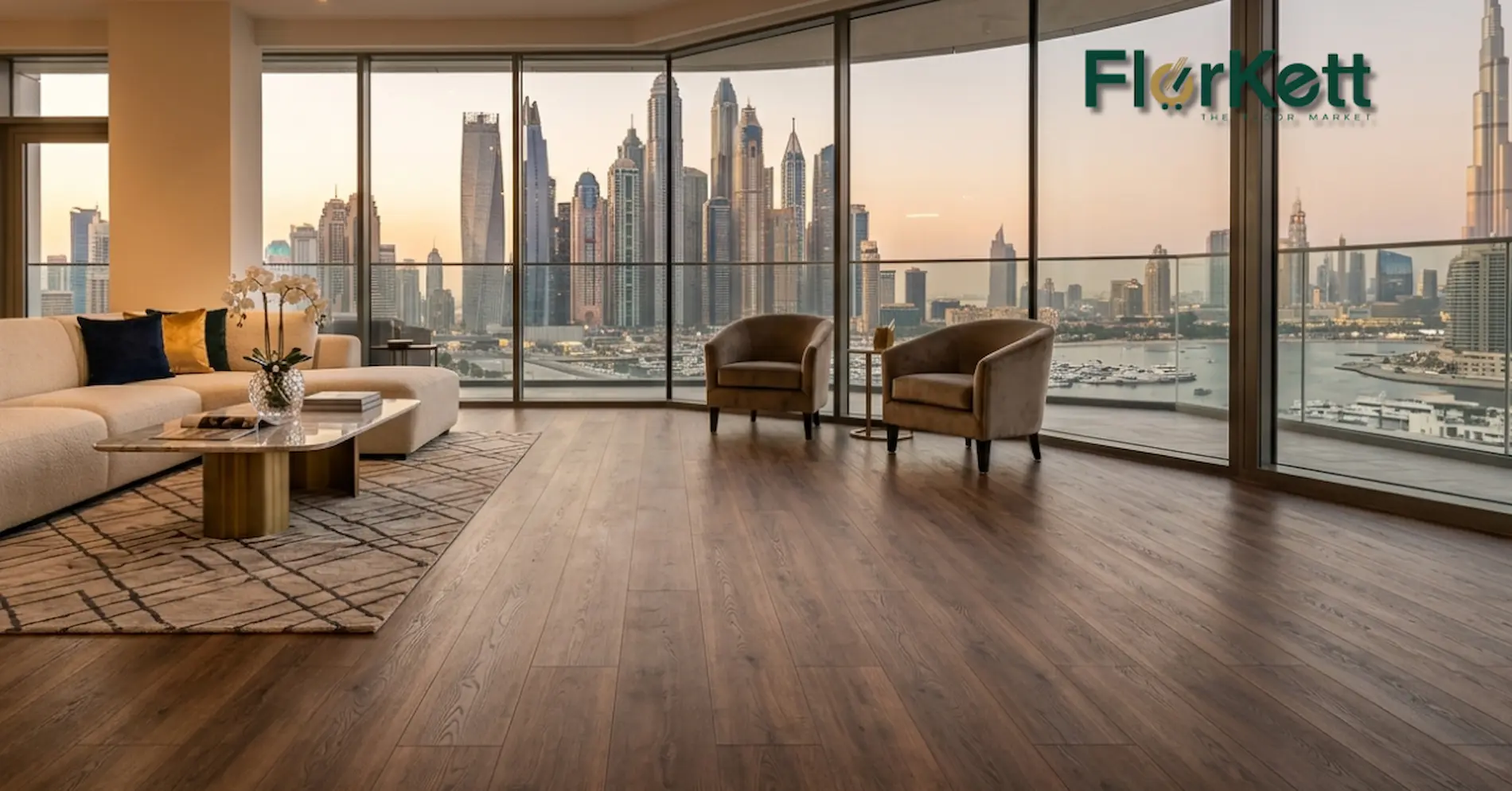
- South- and west-facing rooms that see intense solar gain through glazing
- Villas where the subfloor moisture content hasn’t fully cured yet
One caveat: sustained UV exposure through unshaded floor-to-ceiling windows can still cause slight colour shift over many years in any resilient flooring, LVT included. We advise UV-filtering film or curtains in rooms with unobstructed western sun, which extends the floor’s visual life considerably.
What Design Options Are Available to Achieve a High-End Look?
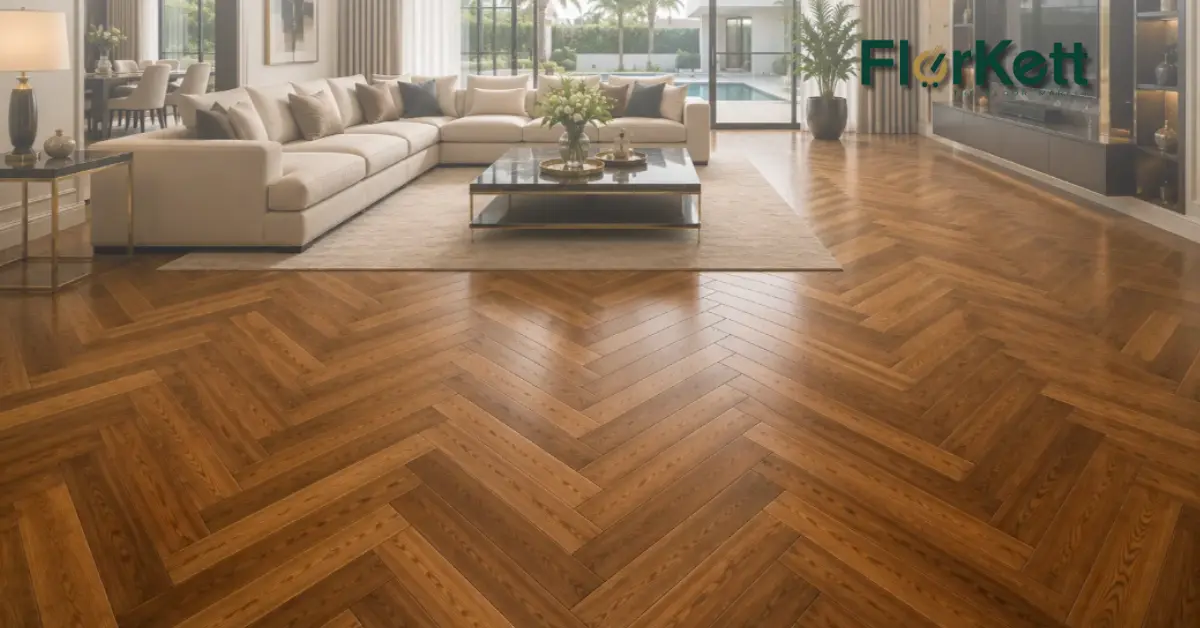
High-end LVT designs include extra-long herringbone planks, large-format stone-look tiles, and mixed-width layouts that mimic bespoke joinery, all specified alongside matching skirting and transition profiles for a seamless look, architect-level finish.
The design conversation has moved well past “does it look like wood.” Clients now ask about pattern layout, plank dimensions, and how the flooring interacts with the room’s wider material palette.
Popular directions we’re seeing in current Dubai projects:
- Herringbone and chevron layouts in oak-toned LVT for formal living and dining areas
- Large-format stone-look planks for open-plan kitchens, echoing the scale of natural slabs
- Two-tone or mixed-width installations, blending a darker border with a lighter field for a custom rug effect
- Matte, low-sheen finishes that read as more natural than glossy vinyl of a decade ago
Matching skirting boards, stair nosing, and door thresholds in the same finish is what separates a genuinely premium result from a floor that simply “looks fine.” We spec these together rather than treating trim as an afterthought, since mismatched transitions are a fast way a high-end material starts looking budget. Viewing samples under the room’s own lighting, not showroom spotlights, also makes a noticeable difference to the final choice.
Is Luxury Vinyl Flooring a Good Investment for Villas and Apartments in Dubai?
For most villas and apartments, LVT delivers strong value because it costs less per square metre than natural stone or engineered wood, requires minimal specialist maintenance, and holds up to the wear patterns typical of family homes and rental properties over a 15–20 year lifespan.
Return on a flooring choice isn’t only about resale value; it’s about avoided costs too. We’ve walked into villas where engineered wood, installed three years earlier, needed full replacement due to moisture damage near the pool deck doors. That cost and disruption is exactly the scenario LVT is built to avoid.
Considerations that affect the investment case:
- Rental properties benefit from LVT’s scratch and dent resistance between tenancies
- Villas with pets see far less surface damage than with hardwood
- Resale-focused owners get a flooring type buyers now recognise as an upgrade, not a compromise
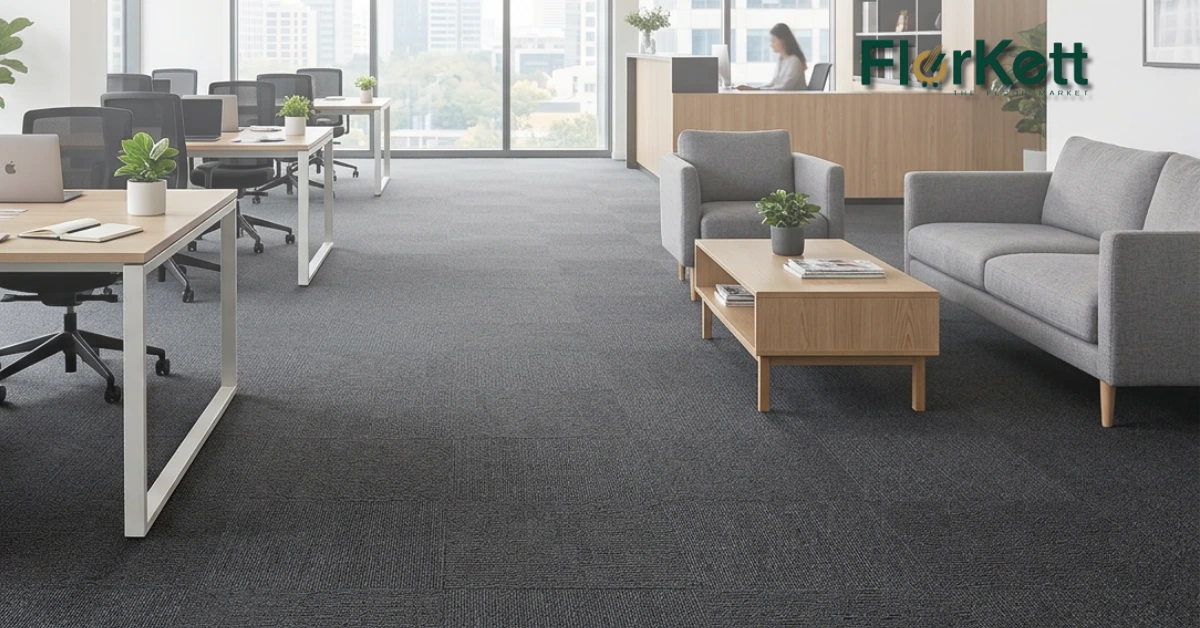
- Commercial-grade wear layers are worth the modest premium for high-traffic hallways and entryways
The upfront saving compared with natural stone is real, but the bigger financial argument is the reduced lifetime cost: fewer repairs, no refinishing, and a shorter void period between tenants if a few planks need spot replacement.
How Do I Choose the Right LVT Flooring Company in Dubai?
Choose a company that shows physical samples on-site under your own lighting, provides a written wear-layer and warranty specification, and has verifiable project photos in Dubai’s climate rather than generic manufacturer renders.
This is where quality control separates suppliers, and it’s a step buyers often rush. Vinyl quality varies enormously between batches and brands, and a glossy catalogue photo tells you nothing about how a product performs after two summers of AC cycling.
Questions worth asking any supplier before committing:
- What is the exact wear layer thickness, and is it commercial or residential grade?
- Can I see the product installed in a completed Dubai project, not a mock-up?
- What subfloor preparation is included, and does it include moisture testing?
- What does the warranty cover: wear, fading, or manufacturing defects only?
Working with an established name among Flooring Companies in Dubai gives you recourse if something goes wrong post-installation, which matters more with flooring than most interior finishes because replacement means moving furniture and living around the disruption again. If comparing multiple suppliers, request the same product code from each so you’re pricing like-for-like rather than a premium wear layer against a budget one at similar price points.
What Should I Expect During Installation and Maintenance?
Professional LVT installation typically takes one to three days for an average villa, depending on subfloor condition, and ongoing maintenance is limited to regular sweeping, occasional damp mopping with a pH-neutral cleaner, and avoiding standing water.
Subfloor preparation determines how the finished floor performs, and less experienced installers are most likely to cut corners here. Residual moisture, unevenness, or old adhesive residue will telegraph through even the best plank over time.
A realistic installation sequence looks like this:
- Site survey and moisture testing of the existing subfloor
- Levelling compound application where needed, with adequate curing time
- Acclimatisation of the planks to room temperature for 24–48 hours before laying
- Click-lock or glue-down installation, chosen by room size and traffic
- Skirting and threshold finishing to complete the look
Day-to-day care is low-effort compared with wood or natural stone: no periodic sealing, no refinishing, no specialist cleaning products. We recommend felt pads under heavy furniture and prompt cleanup of grit tracked in from outdoors, since sand is Dubai’s most common cause of premature surface scratching.
Common Mistakes to Avoid When Selecting Luxury Vinyl Flooring
The most frequent mistakes are choosing a thin wear layer to save cost, skipping subfloor moisture testing before installation, and picking a colour under artificial showroom lighting that looks different once installed under the home’s natural light.
We see the same handful of avoidable issues repeat across projects, and each one is easy to prevent with the right questions upfront.
Watch out for:
- Under-specifying the wear layer for high-traffic zones, leading to visible wear within a couple of years
- Skipping moisture testing, particularly in ground-floor villas or units near water features
- Choosing colour without testing samples in the room, since strong natural light shifts undertones versus showroom lighting
- Ignoring transition detailing between rooms and staircases, affecting both look and trip-hazard safety
- Assuming all vinyl is equal, when wear layer, core construction, and backing quality vary widely
Getting these details right from the outset is far cheaper than correcting them afterwards. If you’re still weighing this material against other options, it’s worth exploring current LVT Flooring Dubai product ranges to compare wear layers, finishes, and pricing side by side before deciding.
Luxury vinyl flooring has earned its place in Dubai’s premium interior market on merit, not as a compromise, but as a material genuinely suited to this climate and lifestyle. The right supplier, specification, and installation process are what turn that potential into a floor that still looks new a decade from now.