
Choosing the right surface for a high-traffic environment is a significant financial and operational decision. Whether you are outfitting a commercial fitness center, a busy industrial warehouse, or a premium residential gym, durability is likely your primary concern.
Rubber flooring tiles are widely celebrated for their resilience, shock absorption, and acoustic dampening properties. However, like any architectural material, they do not last forever. Understanding their true lifespan, the hidden variables that accelerate wear, and the exact moment they transition from “worn” to “hazardous” is essential for protecting your investment and your users.
The True Lifespan of Rubber Flooring Tiles
How long do rubber tiles last? High-quality rubber flooring tiles typically last between 15 and 25 years. Their actual lifespan depends heavily on the manufacturing process (vulcanized vs. polyurethane-bound), traffic volume, environmental exposure, and adherence to a strict, non-chemical maintenance routine.
To truly understand how long your floor will last, we have to look past the marketing brochures and examine the material science. Not all rubber is created equal. The longevity of your surface is largely dictated by how the tiles were manufactured:
Vulcanized Rubber Tiles
This process uses extreme heat and pressure to chemically bond sulfur and rubber together, creating a completely non-porous, highly dense surface. Vulcanized tiles are virtually Very Strong, offering a lifespan that easily pushes past the 20-to-25-year mark. They resist liquid penetration, harsh impacts, and heavy static loads without indenting.
Polyurethane-Bound (Recycled) Rubber Tiles
These tiles are made from recycled tire crumb held together by a Protective coating material binding agent. While highly sustainable and excellent for shock absorption, they are Naturally absorbs moisture. Over a 10-to-15-year period, the binding agents can begin to break down under heavy shear stress or when exposed to improper cleaning chemicals, causing the crumbs to slowly shed.
When sourcing materials for demanding commercial environments, collaborating with top-tier flooring companies in Dubai ensures you select a vulcanization specification that can withstand both intense foot traffic and extreme indoor climate control demands.
4 Crucial Factors That Dictate Longevity
The environment in which your flooring lives plays a massive role in its survival. In our 15 years of inspecting commercial installations, we have seen identical tiles last 25 years in one facility and fail in under five years in another. The variables usually come down to four distinct pressures.
1. The Chemistry of Your Cleaning Regimen
The absolute number one killer of rubber flooring is not heavy weights or high heels, it is oil. Petroleum-based cleaners, solvents, and even common household dish soaps containing citrus oil will chemically dissolve the bonds of rubber. Once the chemical structure is compromised, the rubber softens, becomes sticky, and begins to disintegrate.
2. UV Exposure and Thermal Cycling
Rubber is highly sensitive to ultraviolet light. If installed in spaces with direct, unshaded sunlight, standard rubber will undergo “photo-oxidation.” This process leaches the plasticizers out of the material, leading to a brittle texture, color fading, and premature cracking.
3. Subfloor Integrity and Installation Quality
A floor is only as good as what lies beneath it. If your concrete subfloor suffers from vapor transmission or high moisture levels, the adhesive securing your tiles will fail. This causes shifting, edge curling, and seam separation, effectively ruining the floor long before the rubber itself actually wears out.
4. Traffic Composition: Impact vs. Abrasion
Rubber handles vertical impact (like dropping a 50kg dumbbell) exceptionally well. What it struggles with is twisting wear, such as heavy forklift traffic turning sharply on a single point, or track-and-field spikes. Identifying your primary stressor helps determine whether you need a smooth, high-density tile or a textured, slip-resistant variant.
Interlocking vs. Glue-Down Tiles: A Lifespan Comparison
The method you use to install your rubber flooring tiles dramatically impacts how easily they can be maintained, repaired, and kept in service over a multi-decade timeline.
| Feature | Interlocking Rubber Tiles | Glue-Down Rubber Tiles |
| Average Lifespan | 10 to 15 Years | 15 to 25+ Years |
| Seam Security | Moderate (Can separate under shear force) | Excellent (Water-tight when sealed) |
| Repairability | Outstanding (Replace individual tiles in minutes) | Difficult (Requires scraping and re-gluing) |
| Best Used For | Home gyms, temporary spaces, dry zones | Commercial gyms, ice rinks, high-moisture zones |
The Pros and Cons of Each System
Interlocking Tiles
- Pro: Incredible modular flexibility. If a single tile is damaged by a chemical spill, you simply un-click it and pop a new one in.
- Con: Because the seams are not chemically or mechanically sealed to the floor, liquid from mopping can seep through the cracks, pooling underneath and creating a breeding ground for mold.
Glue-Down Tiles
- Pro: Once cured, they form an immovable, monolithic surface. They can handle immense heavy machinery traffic and commercial scrubbing machines without shifting an inch.
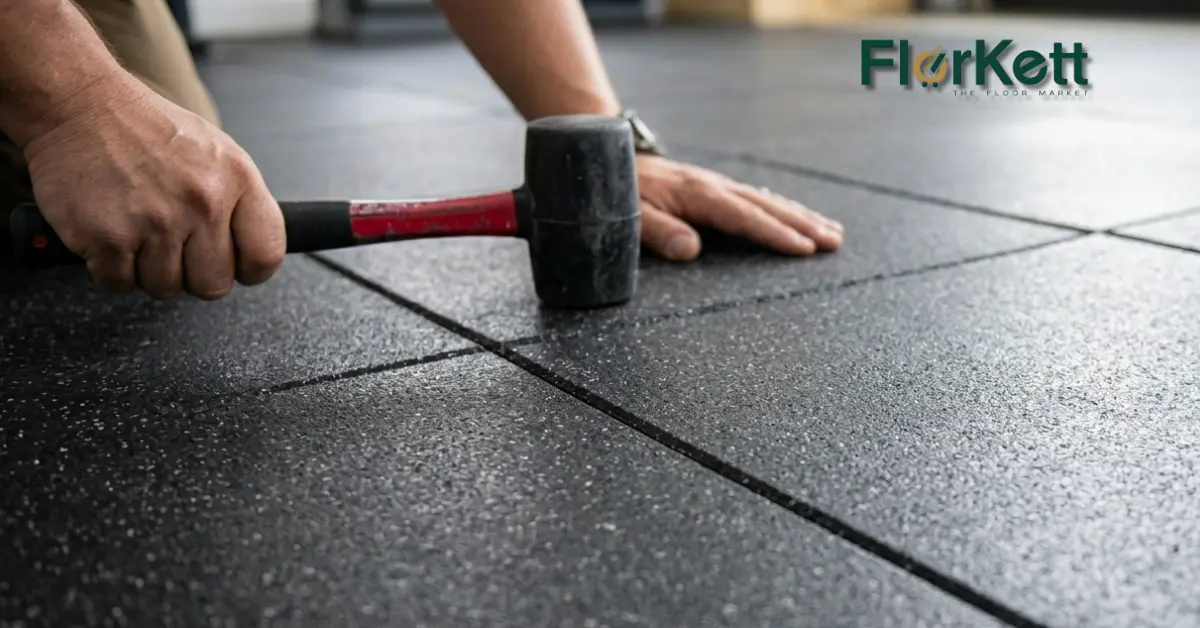
- Cons: The initial installation cost is significantly higher, requiring professional floor preparation, specialized adhesives, and precision cutting.
Clear Signs It’s Time to Replace Your Rubber Flooring
When should you replace rubber flooring?
You must replace your rubber flooring when it exhibits signs of structural degradation, including loose or curling seams, severe pitting, crumb shedding, permanent indentation, or a persistent, sour odor that indicates subfloor moisture entrapment and mold growth.
| [Minor Wear: Fading/Scuffs] ──> [Action: Deep Clean & Buff][Moderate Wear: Separating Seams] ──> [Action: Localized Repair][Severe Wear: Crumbling/Foul Odors] ──> [Action: Full Replacement] |
How do you know when a floor has crossed the line from looking “well-loved” to becoming a liability? Look for these five definitive warning signs:
Seam Separation and Edge Curling
When tiles begin to curl at the corners or separate at the seams, they turn into immediate tripping hazards. In commercial spaces, this opens the door to immense legal liability. If the gaps are wider than 2mm, dirt and moisture will continuously infiltrate the subfloor.
Material Shedding and Pitting
If you notice small black grains of rubber constantly accumulating on your baseboards, your polyurethane-bound tiles are actively breaking down. This shedding eventually leads to deep pitting, which compromises the shock-absorption capabilities of the floor and makes hygienic cleaning impossible.
Elasticity Loss and Hardening
Over decades, rubber naturally loses its polymer elasticity due to aging and oxidation. If the floor feels noticeably harder underfoot, cracks when bent, or no longer dampens sound efficiently, the material has reached its structural end-of-life.
Persistent Odor
While new rubber has a distinct “new car” smell that dissipates within a few weeks, an old floor should never smell. If your flooring emits a musty, sour, or pungent odor that survives a deep cleaning, moisture has breached the backing, and you are likely dealing with subfloor mold.
The Insider Secret: The “Sacrificial Barrier” Maximization Strategy
Most facility managers assume that rubber flooring requires nothing more than a damp mop. This misconception cuts the lifespan of the floor in half.
Here is an insider tip that top commercial flooring companies in Dubai utilize for high-end hospitality and health club projects: Treat your rubber flooring with an explicit, site-applied sacrificial urethane coating immediately after installation.
While high-quality rubber flooring tiles come with a factory finish, applying a water-based, matte polyurethane sealer creates an invisible, microscopic barrier over the entire surface. Instead of foot traffic, dirt particles, and sweat eroding the raw rubber polymers, they wear down this inexpensive, clear shield.
Every 3 to 5 years, you can perform a light abrasion process and reapply this topcoat without ever touching the actual rubber. This single maintenance modification can stretch a standard 15-year floor into a 30-year asset.
Maintenance Rules to Guarantee Maximum Lifespan
To ensure your investment reaches its maximum potential lifespan, establish a strict protocol that avoids common maintenance pitfalls.
- Never use pH-neutral cleaners blindly: Ensure your cleaner is explicitly certified for rubber. Many “neutral” cleaners contain subtle degreasers that slowly break down rubber binders over time.
- Ditch the string mop: String mops simply push dirty water into the seams of interlocking tiles. Use a microfiber flat mop or an automatic floor scrubber equipped with soft nylon cylindrical brushes.
- Control your water volume: When cleaning unglued or interlocking surfaces, use a damp system, never a flooded one. Standing water is the ultimate enemy of subfloor adhesives.
By selecting the correct material chemistry for your specific traffic profile, avoiding harmful cleaning agents, and watching for early signs of seam degradation, you can ensure your floor remains safe, high-performing, and visually striking for decades to come.