
If you’re setting up a home gym or refitting a fitness studio in Dubai, chances are you’ve come across interlocking gym floor tiles and wondered whether they’re actually worth the investment. We work with clients across Dubai every week who are comparing these tiles against rolled rubber, foam mats, and even leaving the original flooring exposed, so we’ve seen firsthand what holds up and what doesn’t in this climate. In this guide, we’ll break down what interlocking gym tiles are, how they perform under real Dubai conditions, what they cost, and how to avoid the buying mistakes we see most often.
What Are Interlocking Gym Floor Tiles, and How Do They Work?
Quick Answer: Interlocking gym floor tiles are modular flooring panels with puzzle-style edges that click together without glue or fasteners. They typically come in rubber, EVA foam, or PVC, and are designed to be laid directly over existing floors to create a cushioned, non-slip workout surface in a few hours.
The tiles are manufactured with tabs and slots along each edge so that one panel locks into the next, forming a continuous surface with no visible seams once installed correctly. Most residential and commercial gym tiles in the UAE market come in standard sizes of 50cm x 50cm or 1m x 1m, which makes it straightforward to plan a layout for irregular room shapes without cutting every panel.
Because they float on top of the sub-floor rather than being permanently bonded to it, interlocking tiles are considered a semi-permanent flooring solution. This is a major reason property owners in Dubai favour them: tenants and homeowners can install a full gym floor without altering the building’s original flooring, and landlords generally have no objection since the tiles lift out cleanly when it’s time to move.
Common core materials include:
- Rubber – dense, heavy-duty, and the standard choice for weightlifting areas
- EVA foam – lightweight and cushioned, popular for yoga, stretching, and kids’ fitness spaces
- PVC/vinyl composite – rigid, easy to wipe down, and often used for cardio zones and studio floors
Are Interlocking Gym Floor Tiles Worth Buying for a Dubai Home Gym?
Quick Answer: Yes, interlocking gym floor tiles are worth buying for most Dubai home gyms because they protect the sub-floor, absorb impact from dropped weights, reduce noise transfer to neighbours, and can be installed or removed without professional labour, making them one of the more practical flooring upgrades for apartment and villa gyms alike.
We get asked this question constantly by clients converting a spare bedroom, garage, or villa basement into a home gym. The honest answer is that for anyone doing resistance training, dropping dumbbells, or using cardio machines, bare tile or marble flooring simply isn’t built to absorb that kind of repeated impact. Cracked porcelain and dented sub-floors are two of the most common damage claims we hear about from residents who skipped proper gym flooring.
Interlocking tiles solve several problems at once. They cushion joints during high-impact training, they muffle the sound of weights hitting the floor, which matters enormously in Dubai’s shared-wall apartment buildings, and they give the space a finished, purpose-built look rather than a converted storage room.
There are situations where they’re less essential; for example, a room used only for light stretching or a Peloton bike may do fine with a single dense mat rather than a full tiled floor. But for anyone serious about strength training at home, we consider proper Gym Flooring Dubai a foundational investment rather than an optional extra.
How Do Interlocking Tiles Perform in Dubai’s Heat and Humidity?
Quick Answer: Quality interlocking gym tiles perform well in Dubai’s climate as long as they’re made from UV-stabilised, closed-cell material and installed on a dry, sealed sub-floor. Lower-grade foam tiles can soften, discolour, or emit odour in direct sun and high humidity, so material selection matters more here than in cooler markets.
Dubai’s combination of intense summer heat and indoor humidity from air conditioning cycling on and off puts flooring materials under more stress than most manufacturers’ default specifications account for. We’ve inspected gyms where budget foam tiles, bought without checking the UV rating, had visibly yellowed and started to crumble at the edges within eighteen months, particularly in rooms with large windows or balcony access.
Rubber tiles generally handle the local climate best because the material is naturally UV-resistant and doesn’t absorb moisture. If you’re set on EVA foam for its cushioning, look specifically for closed-cell, UV-treated foam rather than the cheapest option available, since open-cell foam absorbs humidity and can develop a musty smell over time.
A few climate-specific tips we give clients:
- Avoid installing directly over a damp or uncured concrete sub-floor
- Keep tiled gym rooms on a stable air-conditioning schedule rather than switching AC off for long periods
- Choose darker or matte-finish tiles near windows, since gloss finishes show heat-fading faster
Which Type of Interlocking Gym Tile Should You Choose?
The right material depends on how the space will actually be used. Below is how we typically guide clients through the decision.
Rubber Tiles: Best for Weightlifting and Heavy Equipment
Rubber interlocking tiles are the industry standard for any space with free weights, barbells, or heavy machines. They’re dense enough to protect the sub-floor from dropped plates, they don’t compress permanently under equipment legs, and they’re the most durable option long-term, often carrying commercial warranties of five years or more.
EVA Foam Tiles: Best for Stretching, Yoga, and Kids’ Areas
Foam tiles are softer underfoot and better suited to floor-based movement, martial arts warm-ups, or multi-purpose family rooms. They’re lighter to handle and generally more affordable, but they’re not designed to sit under a squat rack or heavy dumbbell rack long-term.
PVC and Vinyl-Composite Tiles: Best for Cardio and Studio Floors
PVC-based interlocking tiles offer a firmer, more polished surface that suits treadmills, spin bikes, and group fitness studios where a smoother finish is preferred. They’re also the easiest of the three to keep visibly clean, which matters for commercial studios with daily foot traffic.
What Do Interlocking Gym Floor Tiles Cost in Dubai?
Quick Answer: Interlocking gym floor tiles in Dubai typically range from AED 25 to AED 45 per square metre for entry-level EVA foam, AED 45 to AED 90 for mid-range PVC, and AED 90 to AED 180 or more for commercial-grade rubber, depending on thickness, brand, and whether installation is included.
Thickness has the single biggest impact on price within any material category. A 15mm rubber tile built for a home gym corner will cost noticeably less than a 30mm+ tile rated for Olympic lifting platforms, where the extra material is needed to absorb repeated heavy impact without the sub-floor transmitting shock and noise.
Other factors that move the price include:
- Tile thickness – generally 6mm to 40mm depending on use
- Brand and warranty – established suppliers with longer warranties sit at the higher end
- Colour and finish – flecked or coloured rubber often costs more than plain black
- Installation – most interlocking tiles are DIY-friendly, but professional fitting adds a labour cost for larger commercial floors
We’d always recommend getting a like-for-like quote from more than one of the Flooring Companies in Dubai before committing, since pricing for gym tiles can vary significantly between suppliers importing the same underlying material.
How Do You Install and Maintain Interlocking Gym Tiles?
Quick Answer: Interlocking gym tiles are installed by laying them from one corner of the room outward, locking each tile’s tabs into the next without adhesive, then trimming border pieces to fit the walls. Maintenance involves regular sweeping, occasional damp mopping with a pH-neutral cleaner, and checking seams every few months for lifting.
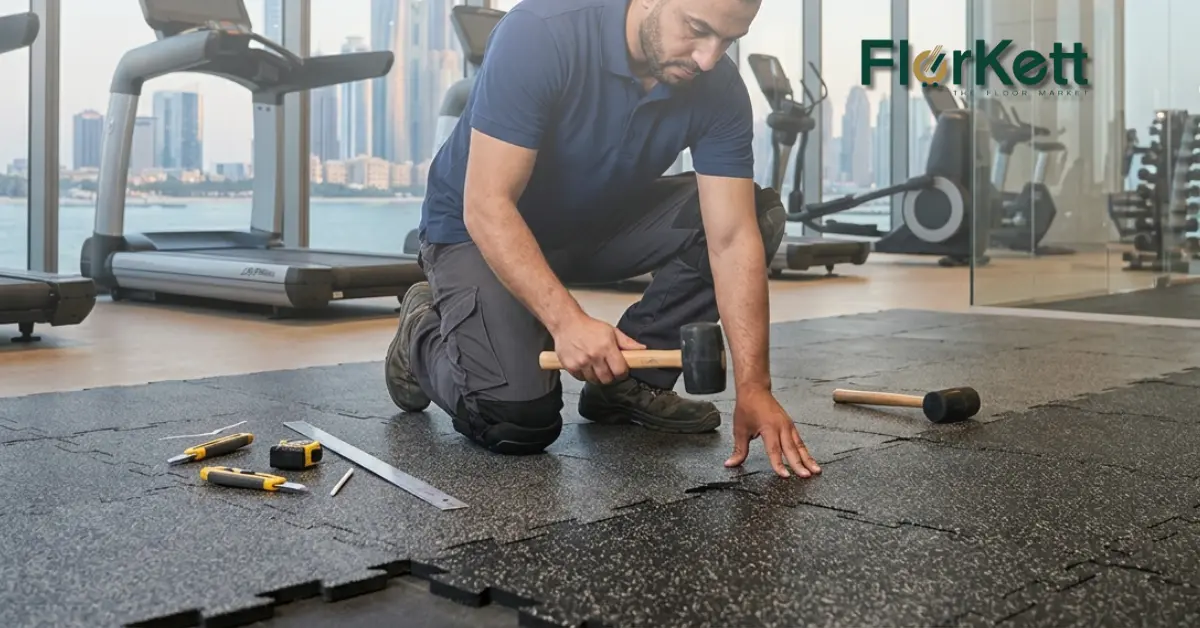
Installation is one of the main reasons people choose this flooring type over glued alternatives. Most rooms under 30 square metres can be tiled by two people in half a day, using a rubber mallet to firm up the seams and a utility knife or jigsaw to cut edge pieces around doorframes and skirting.
For maintenance, we advise clients to:
- Sweep or vacuum the floor at least twice a week to prevent grit from wearing into the seams
- Mop with a mild, pH-neutral cleaner rather than harsh solvents, which can degrade rubber and foam over time
- Avoid dragging heavy equipment across the tiles; lift and reposition instead
- Re-press any tile edges that start to lift within the first few weeks, while the material is still settling
Done properly, a good-quality interlocking floor should need little more than routine cleaning for several years before any tiles need replacing.
Interlocking Tiles vs Rolled Rubber Flooring: Which Should You Choose?
Quick Answer: Interlocking tiles suit smaller or irregular rooms, DIY installation, and spaces that may need to be reconfigured later, while rolled rubber flooring suits large, uninterrupted commercial gym floors where a seamless surface and heavier-duty performance are priorities. Both are valid choices depending on room size and budget.
This is one of the most common comparisons we walk clients through. Rolled rubber comes in large sheets rather than modular panels, which means fewer seams overall and a slightly more uniform look across a big open floor, such as a commercial studio or a full basement gym.
However, rolled rubber is heavier and harder to work with, usually requires professional installation with adhesive, and is far less practical if you ever need to lift the floor and take it with you. Interlocking tiles, by contrast, give you the flexibility to expand a floor later, replace a single damaged panel instead of an entire sheet, and reuse the flooring if you relocate.
Our general recommendation: choose interlocking tiles for home gyms, small studios, and any space where flexibility matters, and consider rolled rubber only for large commercial facilities with a fixed, permanent layout and a bigger installation budget.
Whichever direction you choose, getting the material, thickness, and installation right the first time will save you from costly replacements down the line. If you’re still weighing up your options, our team is happy to walk through your space and recommend a flooring solution suited to Dubai’s climate and your training needs.