
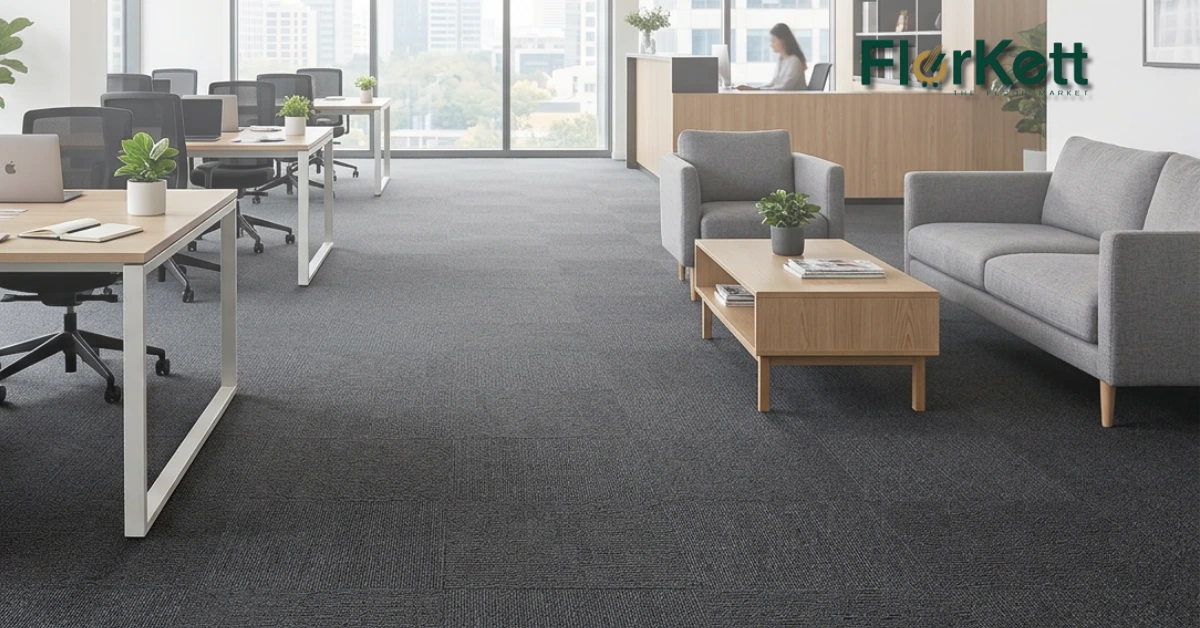
Selecting the right commercial flooring solution determines your space’s long-term maintenance costs, acoustic comfort, and aesthetic appeal. Nylon carpet tiles represent the premier choice for modern corporate offices, healthcare facilities, and retail environments requiring heavy-duty performance.
What Makes Nylon Carpet Tiles the Best Choice for Commercial Flooring?
Nylon carpet tiles offer unmatched durability, exceptional stain resistance, and superior elasticity compared to other synthetic flooring options. Their modular design allows for rapid installation and localized replacement, minimizing operational downtime while delivering long-term value for high-traffic commercial environments.
| Key Advantage | Operational Benefit |
| High Resilience | Retains structural shape and texture under heavy foot traffic and rolling caster chairs. |
| Modular Flexibility | Swap individual worn or damaged tiles easily without replacing the entire room’s flooring. |
| Advanced Stain Defense | Solution-dyed fibers resist harsh chemical spills, deep discoloration, and bleach cleaning. |
| Acoustic Insulation | Absorbs ambient sound and attenuates impact noise across busy open-plan office layouts. |
Nylon 6 vs. Nylon 6,6: Understanding Fiber Performance
When evaluating commercial carpets, the fundamental chemical structure of the fiber dictates performance:
- Nylon 6,6: Features a denser molecular structure, offering maximum resistance to friction, heat, and fiber crushing. Ideal for high-density traffic zones such as main corridors, reception areas, and elevator lobbies.
- Nylon 6: Highly receptive to vibrant dye processes and completely recyclable back into new fiber. Performs exceptionally well in standard corporate settings while supporting circular sustainability initiatives.
Modular Flexibility and Waste Reduction
Traditional broadloom carpet installations generate up to 15% material waste due to complex room cuts and irregular layouts. Modular carpet tiles reduce install waste to under 4%. Furthermore, when localized spills or wear occur, facility managers replace only the affected tiles rather than tearing up entire rooms, drastically lowering ongoing facility lifecycle expenses.
How Do You Select the Right Pile and Construction Type?
Choosing the correct pile construction depends entirely on traffic volume, maintenance capabilities, and acoustic requirements. Loop pile constructions maximize wear resistance in high-traffic zones, while cut pile offers enhanced underfoot comfort for executive suites and private spaces.
| Construction Type | Characteristics | Primary Best Use |
| Standard Level Loop | Uniform loop height creating an even, dense surface that keeps soil on top. | High-traffic corridors and rolling chair areas |
| Multi-Level Loop | Varying loop heights creating geometric textures and multi-dimensional patterns. | Open office floorplates to disguise soil |
| Cut & Loop / Tip-Sheared | Combines cut fibers with loops for a rich visual contrast and soft feel. | Executive boardrooms and private offices |
Gauge and Tuft Density Specifications
Pay close attention to technical specification sheets during procurement:
- Gauge: The distance between needles across the width of the tile (e.g., 1/10 or 1/12 gauge). Higher numbers indicate tighter loop placement and greater resistance to matting.
- Tufts Per Inch (TPI): Measures stitch density along the length of the tile. Higher TPI correlates directly with improved pile recovery under heavy furniture loads.
For specialized projects in the Middle East requiring heavy-duty modular solutions, consulting experienced supplier networks like specialized Flooring Companies in Dubai ensures your technical specs align with regional climate and humidity demands.
How Does Nylon Compare to Alternative Commercial Flooring Materials?
Nylon outperforms materials like polypropylene, polyester, and luxury vinyl tile (LVT) by balancing wear resistance, acoustic dampening, and underfoot comfort. While hard surfaces reflect sound and cheaper synthetics mat quickly, nylon maintains structural integrity across multi-year commercial lifecycles.
| Feature / Metric | Nylon Tiles | Polypropylene Tiles | LVT (Luxury Vinyl) |
| Traffic Endurance | High (Bounces back) | Moderate (Mats permanently) | High (Hard wear layer) |
| Sound Absorption | Excellent (Reduces impact noise) | Good | Low (Echoes sound) |
| Stain Resistance | High (Solution-dyed) | Excellent | High |
| Spot Repair Ability | Simple (Single tile swap) | Simple (Single tile swap) | Complex (Plank replacement) |
Acoustic Performance in Open-Plan Offices
Hard floor surfaces act as acoustic mirrors, bouncing ambient speech and footstep noise across open layouts. Nylon carpet tiles equipped with cushion backings absorb airborne noise and reduce impact sound transmission (IIC rating) by up to 25 decibels compared to polished concrete or vinyl.
Soil Protection and Solution Dyeing
Solution-dyed nylon integrates color pigments directly into the liquid polymer state before the fiber is extruded. This locks the color into the entire cross-section of the fiber. As a result:
- Harsh bleach-based cleaning chemicals will not strip the color.
- UV exposure from perimeter windows will not cause premature fading.
- Soil sits on the surface where vacuuming can easily remove it.
What Are the Best Practices for Installing Nylon Carpet Tiles?
Proper installation requires meticulous subfloor preparation, accurate moisture testing, and selection of the appropriate adhesive system. Following manufacturer guidelines prevents tile shifting, edge curling, and seam telegraphing across high-use zones over time.
| Installation Step | Critical Action Required |
| 1. Subfloor Prep | Clean, level, and dry concrete substrate thoroughly; level deviations over 3/16 inch. |
| 2. Climate Control | Store tiles on-site for 48 hours before installation to acclimatize to ambient conditions. |
| 3. Layout Mapping | Establish perpendicular center lines to ensure balanced cuts at perimeter walls. |
| 4. Adhesive Application | Apply pressure-sensitive tackifier or utilize adhesive connectors at corners. |
| 5. Tile Placement | Follow backing arrows to install in desired direction (Quarter-turn, Ashlar, or Monolithic). |
Subfloor Preparation and Moisture Mitigation
Before laying down a single tile, inspect the concrete substrate thoroughly:
- Moisture Testing: Conduct Relative Humidity (RH) testing via in-situ probes. Moisture levels exceeding 85% RH require a specialized vapor mitigation epoxy coating.
- Surface Flatness: Level deep cracks or spalls using self-leveling cementitious underlayments. Any surface deviation greater than 3/16 inch over 10 feet will translate through to the finished surface.
- Cleanliness: Sweep and vacuum away all dust, oil, paint overspray, and existing adhesive residue that could break down new adhesives.
TacTiles vs. Full-Spread Tackifier Adhesives
- Pressure-Sensitive Tackifiers: Applied across the entire floor with a fine-notch trowel or roller. Dries tacky, preventing lateral movement while allowing straightforward tile removal later.
- Adhesive Connectors (TacTiles): Small adhesive squares placed at the corners connecting tiles, creating a floating floor system. Eliminates the odor of liquid glue and significantly speeds up installation.
If you are sourcing high-spec flooring modules for commercial fit-outs, exploring options for Carpet Tiles Dubai provides access to leading tile designs engineered specifically for extreme-climate stability.
How Do You Maintain Commercial Nylon Carpet Tiles for Longevity?
A proactive maintenance program combining daily vacuuming, immediate spot treatment, and periodic low-moisture extraction extends carpet life by years. Preventive care protects your initial capital investment and keeps internal air quality high.
| Care Tier | Recommended Frequency | Primary Objective |
| Daily Maintenance | Daily / High-Traffic | Vacuum main corridors using dual-motor HEPA units to lift dry soil. |
| Interim Care | Every 3 to 6 Months | Apply low-moisture encapsulation detergent to crystallize sticky oils. |
| Deep Restoration | Bi-Annually / Annually | Hot water extraction to deeply flush embedded grit from backing layers. |
The Three-Tiered Maintenance System
- Preventive Protection: Place walk-off matting systems (minimum 12–15 feet) at all building entry points to trap coarse dirt, moisture, and debris before it reaches main carpeted areas.
- Daily Routine Maintenance: Use commercial HEPA-filtered upright vacuums with dual motors. Vacuum high-traffic corridors daily and secondary office areas twice weekly.
- Interim Cleaning (Encapsulation): Apply a specialized low-moisture encapsulation detergent every 3 to 6 months. The formula crystallizes around sticky soils, allowing standard vacuuming to lift it out easily.
Handling Severe Spills and Tile Swapping
When stubborn spills like coffee, ink, or chemicals occur:
- Blot the stain immediately with clean white microfiber cloths—never scrub, as scrubbing frays fiber tips.
- If a stain cannot be removed, insert a carpet utility knife along the seams, lift the affected tile, clean the subfloor, and press a fresh attic-stock tile into place.
What Environmental and Sustainability Certifications Should You Look For?
Modern commercial nylon carpet tiles prioritize circular economy design, low-VOC emissions, and recycled material content. Securing certified products ensures compliance with green building standards such as LEED, WELL, and BREEAM.
Key Green Certifications
- CRI Green Label Plus: Guarantees that the carpet, adhesive, and backing emit extremely low levels of Volatile Organic Compounds (VOCs), protecting indoor air quality for building occupants.
- Cradle to Cradle (C2C): Assesses product safety to human health and the environment, evaluating designs for future life-cycle reusability and clean manufacturing processes.
- EPD (Environmental Product Declaration): Provides transparent, third-party verified data regarding the life-cycle environmental impact of the product from raw material extraction to disposal.
Recycled Content and Closed-Loop Recycling
Leading manufacturers now utilize 100% regenerated nylon yarn (such as ECONYL®), made entirely from recovered ocean plastic, discarded fishing nets, and post-industrial carpet waste. Combined with eco-friendly backing materials free of PVC and phthalates, today’s nylon tiles deliver peak commercial performance while dramatically reducing carbon footprints.